 Fractions aren’t easy, but this still makes it into my maths fail collection.
Could make an interesting discussion point in a lesson – who can spot the error (although my highlighting helps!)
The original can be found here.
Fractions aren’t easy, but this still makes it into my maths fail collection.
Could make an interesting discussion point in a lesson – who can spot the error (although my highlighting helps!)
The original can be found here.
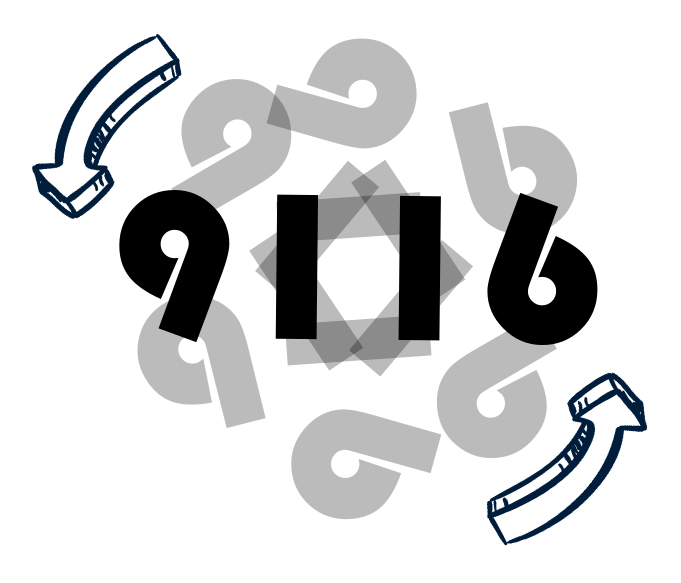 9th Jan 2016 – 9 1 16 – it’s not a palindromic date, but it is a rotational date: it has an order of rotational symmetry of 2. That means if you rotate it about its centre it looks exactly the same when rotated through 1800
(You have to pick the right font, of course. In my example above I’ve used “Bauhaus 93”)
Get spinning and enjoy the day!
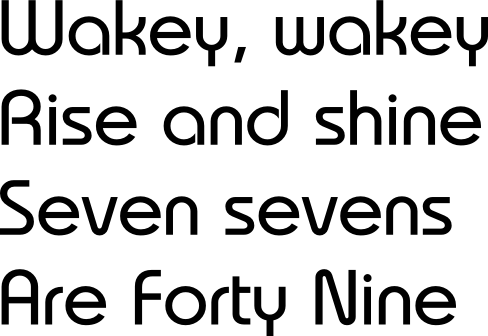 And so it rumbles on, the great times tables debate: should pupils be expected to know – by heart – their times tables to twelve by the end of Year Six?
Christine Blower, the leader of the NUT, has waded in to the argument, suggesting that tables don’t need to be known of pat as they can be looked up on the phone:
Looking up your times tables is very easy to do. So the other thing we have to do is to make sure that children and young people use the computing ability on their mobile phones so they can get that at their finger tips. Recall is not the only way to make sure you understand mathematical concepts
I do struggle to see what the objection is to having pupils learn their tables. After all, it’s only 144 pieces of information to learn. Is that really too much to expect of an eleven year old?
But its not 144 pieces of information anyway.
The one times table is just the numbers themselves, as 1 x anything remains unchanged. This is an important mathematical principle that is still very useful at GCSE and A Level, so well worth teaching. So that’s 12 pieces of data we don’t need to recall.
And most children quickly spot the pattern for the 10 times table – “just add a zero on the end” – and, although a little more complicated, the symmetry of the 11 times table – at least up to 9 x 11 – makes it fairly memorable. Encouraging children to spot and exploit these patterns is encouraging them to be mathematical – after all, maths is all about finding short cuts and being efficient – so even the most progressive of the “progressives” should welcome the teaching of these times tables. So that’s another 21 pieces of info we don’t have to remember. (12 for the ten times table, and 9 for the eleven – the simple symmetry begins to break down after 9 x 11.)
So, we’re now down to 144 – (12+12+9) = 111 pieces of information to remember. Not to much of a daunting task.
But hang on a minute.
7 x 4 = 28, but also 4 x 7 = 28. It doesn’t matter what order we do our multiplication in, the answer is the same. This is because multiplication is commutative, and cuts what we need to know in half. Pupils need to know the commutative laws – again, it’s being “mathematical” – whether they need to know that it’s called commutative is another argument for another day.
There is an argument that knowing the 12 times table is unnecessary and I might be tempted to agree. But, coincidentally, as I was pondering this I saw an add for a subscription service. Guess what, I multiplied (in my head!) the monthly cost by 12 to get the annual cost.
So we’re now down to knowing 56 times tables, 56 individual pieces of information. A reasonable request of an eleven year old.
Ms Blower is right – we live in the information age and, through the magic of technology, we can instantly summon all sorts of facts and figures at the touch of a button. We don’t need to remember everything, but we do need to remember some things. Knowing which letters, and it what order, join together to create a word is important (its called spelling) and knowing how numbers multiply together is also important.
We have to teach ’em some maths in Primary schools, so why not times tables? It’s not all rote and recall, teach tables properly and you are also teaching the children to think mathematically, to be mathematicians and you’ll also be equipping them with skills and knowledge that they will use for the rest of their lives: much quicker than whipping out your phone, entering your pass-code, finding the calculator app …
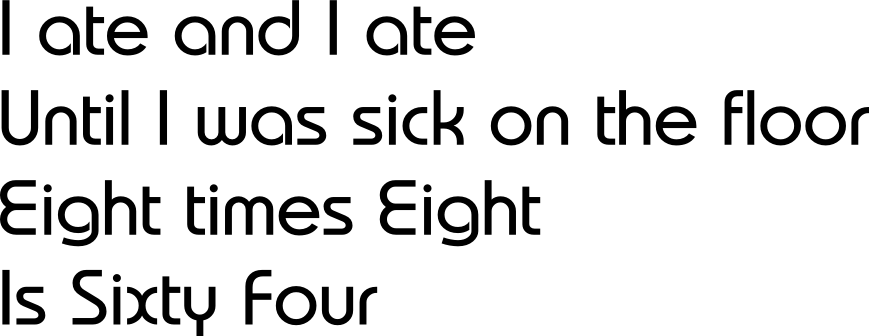 The Government has announced that it expects all children to be able to recall their times tables – up to and including 12 x 12 – by the time they reach age 11 and leave Primary School.
Quite right too. They should know them before age 11, but it makes sense to test them at this point as part of the Key Stage 2 tests.
Last term I was shocked when one of my year nines said to me:
… but sir, 5 x 10 can’t be fifty. 10 x 5 is fifty.
This year, I teach the “bottom set” of year nine and (for some of them) their inability to instantly recall basic numerical facts – after nine years of compulsory education – frightens me. There is no doubt in my mind that a lack of fluency in their times tables holds them back.
Of course, knowing your times tables is not a panacea for all innumeracy but it is a vital part of the solution. I would also like to see pupils – at home and at school – “muck about” more with numbers; play games – cards, monopoly, darts; go shopping with hard cash in their pocket etc., all of which will help to develop basic numeracy skills and put numbers in context.
There has been much in the media and press about this story today, much of it positive and supportive. The best quote I have seen was on Twitter from @MarkMcCourt of eMathsUk:

 Happy New Year!
I hope 25 x 32 x 7, or 2016 as it prefers to be known, is a good year for you.
2016 is 11111100000 in binary and 7e0 in hexadecimal, which is this shade of blue.
Happy New Year.