Fractions worksheets

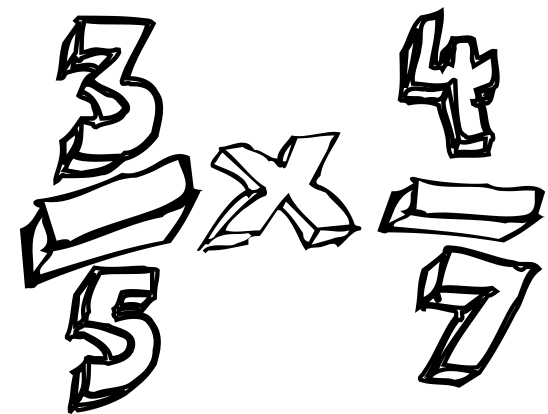
Multiplying fractionsFractions – the bane of many a pupil’s, parent’s and – let’s be honest – teacher’s life.

With the advent of the calculator, with the ability to do fraction calculations in a snap, I often hear the anguished cry of “what’s the point of this, why can’t I just use my calculator?”

And it is, perhaps, true that the need to do fraction ‘sums’ manually has diminished enormously since the advent of the scientific calculator.

But, as September has come and gone and we find ourselves in mid- October and Year 12 (the lower-sixth in old money) settle down to enjoy the rigours of AS and A-Level maths, one is reminded of the need for A-Level students to be fluent in the manipulation of algebraic fractions.  And this is made so much easier if they have met and mastered the four rules (adding, subtracting, multiplying and dividing) fractions with numbers earlier in there mathematical journey.

So, whilst it may not be everybody’s favourite topic, it is an important skill to master.

And to help pupils master it, they need to practise it. And to help them practice, I’ve produced some worksheets for adding, multiplying and dividing fractions.

And if you want a worksheet that contains all three types of problems, you can make one using my custom worksheet page (or click here, for one I prepared earlier!)

As with all my worksheets, they generate an unlimited number of different questions, are optimised for printing (so you don’t waste loads of ink), look great on an interactive whiteboard and come complete with the answers – hidden behind a ‘click’ if you’re projecting them onto your board, or printed on a separate sheet if you are printing them out. Oh, and they are entirely free, too!

And the answer to the question at the top of the page? Well it is, of course …

12 over 35(remember: when multiplying fractions, its top x top, bottom x bottom)
Posted in Numeracy, Teaching Tips | Tagged , | Comments closed

3n + 4 day

3n + 4 dayMonday 7th October 2013 – 7 10 13 – is 3n + 4 day, a great way to start the teaching week!

My classes will be writing the date in their work as 3n + 4.

What else can you do with this date?

You could ask some questions, like:

  • When and what will be the next xn + y date?
  • How many are there each year?
  • Will there always be dates in this format each year?
  • Assuming the form xn + y, will there ever be the case when x is a negative number?
  • What other number pattern dates are there? In the summer we enjoyed Fibonacci Day: 5 8 13, when will the next Fibonacci day be? What about Triangular or Square number days?
  • What other exciting dates are there? Palindromic dates, Pi Day etc.

Some food for thought that you may what to ask your classes as a 5 minute filler at the end of the lesson.

Whatever you do, remember the date: 3n + 4, and enjoy the day!

7 10 13

Posted in Algebra, dates, Teaching Tips | Tagged | Comments closed

Fun, but infuriating!

You cant do simple maths under pressureThis is great fun!

A really simple idea, well executed, this online game asks you a simple maths question and offers two possible solutions.  All you have to do is click on the right answer to get the next question and start progressing up the levels.  Get a question wrong, and its game over.

But, to make matters more “interesting,” you only have a finite amount of time to answer each question and a repetitive (and slightly annoying) sound track plays, ramping up the pressure.

Its great fun to play individually, but I have used it as a class challenge – it works really well on the Interactive Whiteboard and I invite a pupil up to have a go. When they make a mistake or complete a level they sit down and another student takes their place on the hot spot. After a set amount of time, or when everyone’s had a go, we see to what level the class has reached and this is their target for next time.

What I really like about this game is, as the levels get harder, it encourages pupils to develop strategies for swift mental arithmetic and processing – often you don’t need to work out the exact answer, but just which one could be the answer.  The time questions are a great example of this, looking for shortcuts to a solution: that’s being mathematical – and doing it under pressure, too!

Visit the site (link below), play the  game yourself, try it with your classes and let me know what you think in the comments section.

Good Luck!

You can’t do simple maths under pressure

Posted in Games, Numeracy, Teaching Tips | Comments closed

Estimate the angle Part II

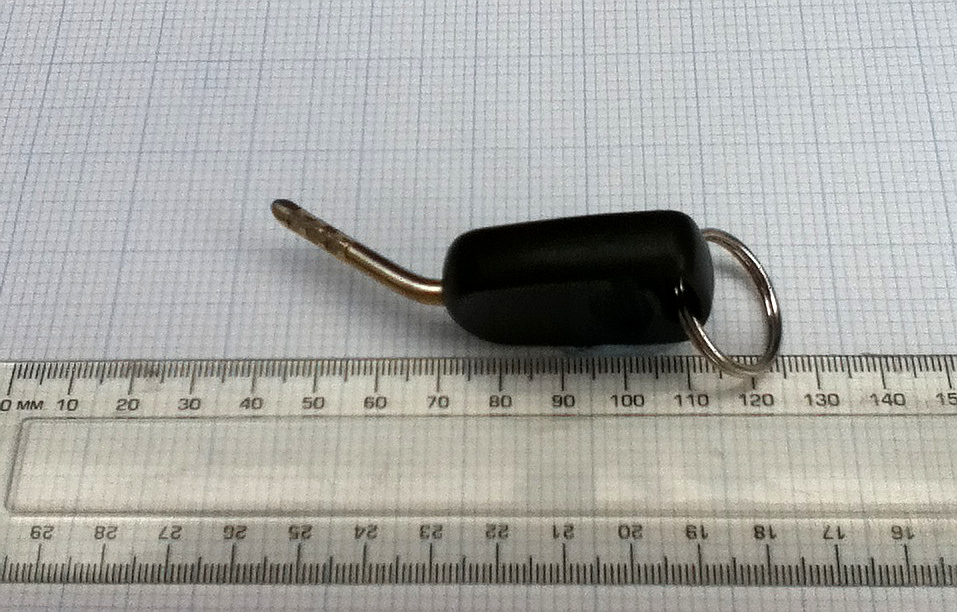
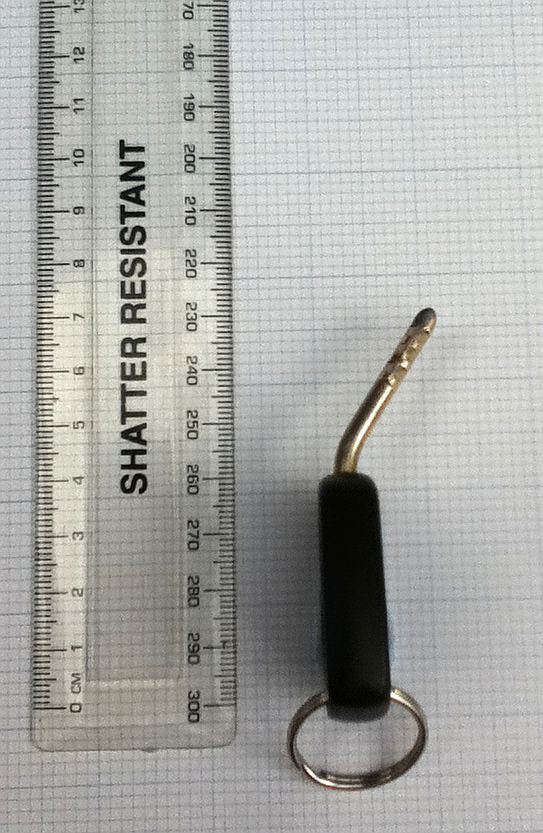
Estimate the angle of the bent key

A lot of you have been using and playing my Estimate the Angle Game where you are shown an angle and you have to estimate its size to the nearest degree.

Well, here’s a real world version for you.

This morning as I was getting into my car to head to school another vehicle came whizzing down the road. Despite being a dry day in broad daylight, he “didn’t see me.” I saw him and I realised he wasn’t going to slow down, stop, or move over so at the last minute I flattened myself against my car and swung the door closed.

BANG! He struck my car door (fortunately missing me by mere millimeters), wreaking havoc with the door and the front wing of my car. Alas, I fear that my trusty (if a bit rusty) reliable stead is destined for the scrap yard, but at least I, and the other driver, were unscathed.  It wasn’t until some time after the accident that I noticed that my key – which had been in the door of the car when it was hit – had been bent.

Seeing maths in everything, I ask you the question: “Estimate the angle that the key has been bent through.”

Bent Key

Posted in Games, Geometry | Tagged | Comments closed

What makes a good school?

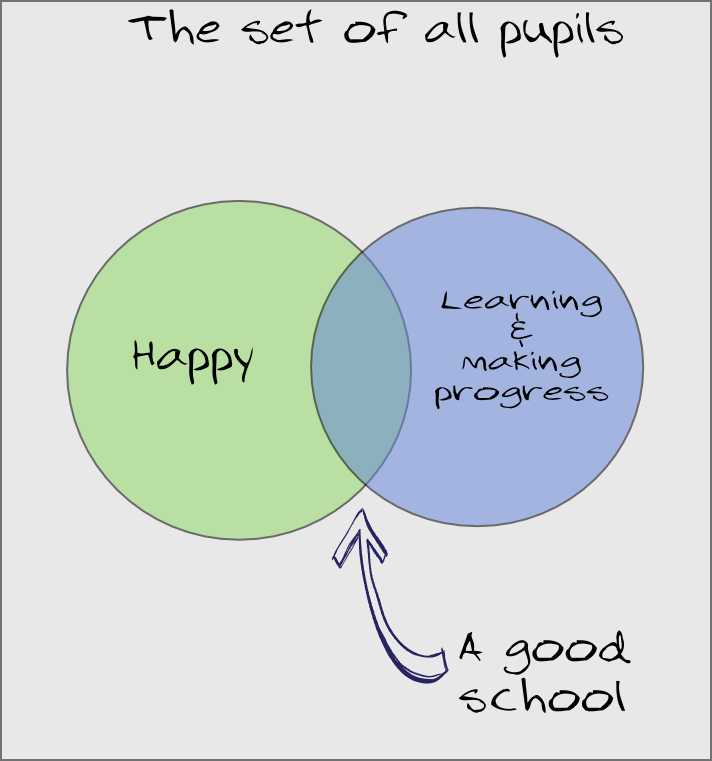
What makes a good school - venn diagram 1What makes a good school – a question that is often asked, by parents, teachers, Ofsted, the government, pupils … anyone with an interest in education.

(For the purposes of this post, I’m not using the Ofsted categorisations of schools: Outstanding, Good etc. I am using the term “good school” in a fairly generic way. I suppose, as a rule of thumb, a “good school” for these purposes would be one that you’d be happy to send your children to, or that you’d want to work in.)

Throughout my teaching, I’ve been lucky enough to teach in a number of good schools and it got me thinking: “What makes a good school a good school?”

Well, obviously, to be a good school the pupils have got to be learning and making progress. With all the data we now have in schools, this should be fairly easy to measure.

But its not enough to just be learning & making progress, we (as parents) want our children to be happy. Measuring happiness is more subjective, but there are those that claim it can be done.

Draw a Venn diagram showing the pupils that are happy and the pupils that are learning and making progress and the size of the intersection determines how “good” a school is. The bigger the intersection, the better the school. I’ve illustrated this in the diagram above.

But are happiness and progress all that we are interested in?

Perhaps not. Increasingly, we want schools to take responsibility for the health and well-being of our children and we want them to be well-mannered and well-behaved members of the community, so maybe we need to measure these as well and add them as new elements to our Venn diagram, like the one below.

Again, the bigger the intersection, the better the school.

Good school Venn diagram 3I like Venn diagrams – and most graphs and charts – at a glance they convey a great deal of information.

The more I think about it, the  more I like this idea for assessing schools. What do you think? What have I missed? What other elements do we need to add to our Venn diagram? And what is its big weakness? (I can think of at least one!)

Use the comments section to let me know your thoughts – whether you be pupil, parent, teacher or even Ofsted inspector!

Posted in Handling Data | Tagged | Comments closed