A marathon, not a sprint

Run 10K largeI like food. I love to eat. But, alas, several years ago I reached the age where I could no longer eat what I wanted and not worry about it. I faced a choice. A difficult choice: either eat less or exercise more.

Eating less did not seem particularly attractive to me so I decided to exercise more and I took up running.  I found I rather enjoyed it and began to enter some 10 Km races.  I wasn’t particularly swift, but it helped burn off those excess calories.  One of the favourite races I used to enter was the Cancer Research 10K, held each year at Longleat.  It was a great run, set in stunning surroundings (and there was always some wag cracking jokes about releasing the lions after half an hour, just to give you that added incentive to keep going.)

The final kilometer is perhaps amongst the best of any run: you pass the 9 km marker as you round a bend to exit some woodland onto the long driveway leading gently downhill to the magnificent facade of Longleat House, and flanked by a sea of spectators and well-wishers, all urging you on towards the finish line.

Seeing this site for the first time, hearing the crowd for the first time, I upped my pace and began the triumphant canter towards the end of the race. On I ran. And on, and on. And on. And I began to flag a little.  The old, the frail and the infirm began to pass me.  I’d peaked too soon. Having run 9 of them already, 1km didn’t seem like too far to go, but I was averaging a little over 5 minutes per km, and no way could I keep up my new pace for that long.  I slowed up and, eventually, gratefully, gasping, I crossed the finished line.

A little older, a lot wiser and perhaps a little slower, the following year I remembered my “difficult last k” as I rounded the bend on to the home straight, paced myself and finished the race stronger and faster.

And this is where we are at now with our GCSE and A-Level classes. The end is in sight, the pace has quickened and I do seem to be on a neverending cycle of producing and marking past papers for pupils to practise.  But I still remember that race, and the need to be able to keep going until the very end. I’m keeping a few past papers up my sleeve for the very final push, the sprint finish that will hopefully result in my pupils achieving the very best that they can.
Posted in Exam tips | Tagged | Comments closed

David Moyes – Flawed genius or just plain unlucky?

Lucky football?

Napoleon had his “lucky generals.” When told of the heroism, skill and experience of a General he is reported to have asked:

That’s all very well, but is he lucky?

Even the most football-phobic can’t help to have heard of the recent sacking from Manchester United of their manager, David Moyes.  Moyes had a torrid ten-month spell at the helm of arguably the most famous football club.  He got off to a great start, winning his first league match in charge 4-1. But its all been downhill from there.

But what happened? He’d been a successful manager at Everton before being “chosen” by Sir Alex Ferguson as his anointed successor to take over the club on his retirement. You don’t lose your talents and skills overnight, so what went wrong, why have the club done so badly this season after being crowned champions at the conclusion of last?

There are many, many reasons, and many far more qualified than I to comment and pass judgement.  But there is one interesting ‘statistic’ I read a couple of months ago that I think is pertinent to the discussion, and one that I have not yet heard mentioned.

Favourites win less often in football than any other sport.

Football is not a random game but it is, it seems, more random than most games.  Random doesn’t sound very romantic, especially when discussing the ‘beautiful game’, but if we say it is a less predictable sport than most, that the underdog has a greater chance of causing an upset, then perhaps we begin to explain the allure of the game.

I discovered this gem whilst reading “The Numbers Game” by Chris Anderson & David Sally who take an analytical and statistical look at the game of the football.  The book is rigorous yet readable, the produce the data and interpretation to develop and back up claims such as the one above.  If you like football and you like numbers, you’ll probably enjoy this book.

So perhaps Moyes was just one of Napoleon’s unlucky Generals. After all, they still won more matches than they lost.  Perhaps those that he did lose were down to luck, the unpredictability of football. Had he been ‘given time’ like his predecessor his (bad) luck would have become statistically insignificant and he would have gone on to greatness with the club. But now we shall never know.

Posted in Probability | Tagged , , , | Comments closed

A Marathon Problem

Picture courtesy of Kyle Taylor

Picture courtesy of Kyle Taylor under Creative Commons License


I once half ran half of a half marathon, and got half way.


So if a half marathon is 13.1 miles how far did I run?

And if I took half an hour, how fast did I run?

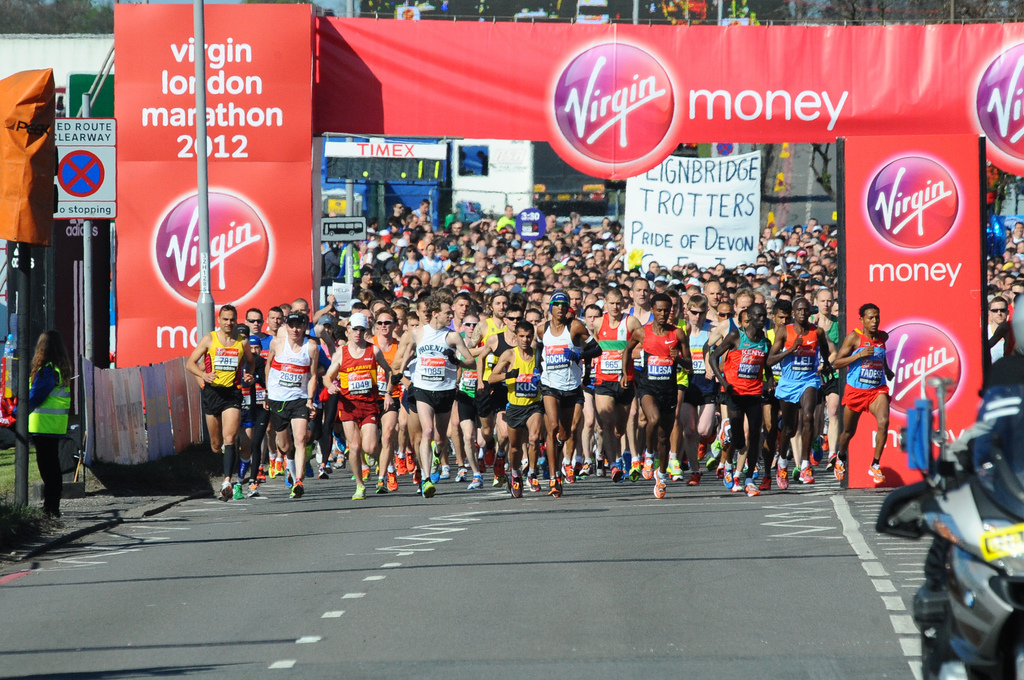
Best of luck to any of you running in tomorrow’s London Marathon. Perhaps you can ponder the above as you pound the pavement.

[Many thanks to @thewritertype from whom I shamelessly nicked this quote. You could follow him on Twitter – he’s funny – and you could buy his book, it’s very funny.]

Posted in Numeracy, Puzzles | Comments closed

If you don’t have much time …

… stop reading now

as I don’t want to be responsible for you frittering away anymore of your valuable time.

Still reading? OK , good, but be warned, you are liable to loose hours, days, maybe even weeks playing:

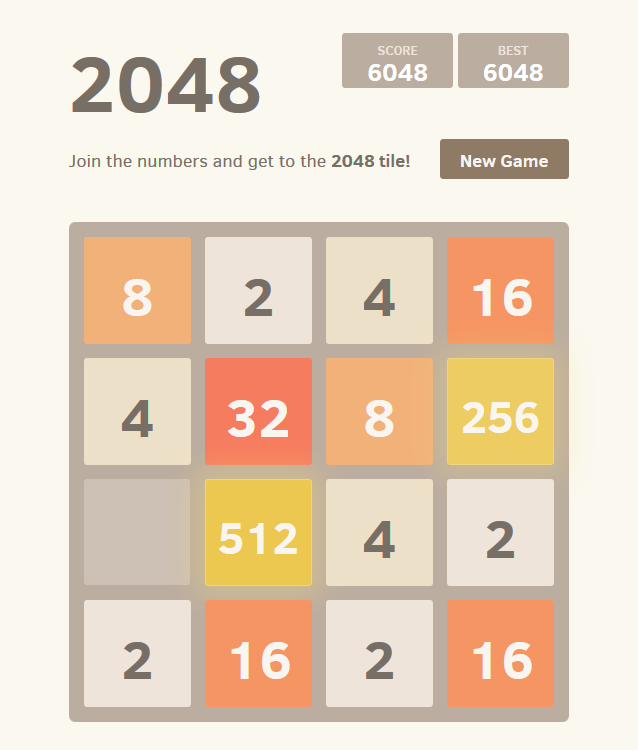
2084 GameIts a simple game that you can play either online or as a (free) downloadable app.

The aim of the game is either:

  • Get the highest possible score, or
  • Get the highest possible single tile (perhaps even the 2048 tile from which the game takes it name.)

Your play the game by sliding the squares left or right or up or down.  When two squares (tiles) with the same number crash into each other they combine together to make one tile with double the total of the individual tiles. Each time you swipe, an randomly chosen empty space is filled with either a “2” tile or a “4” tile, so you have to keep combining tiles, otherwise your board fills up pretty quickly.

Its great fun, but a little addictive: you can find the game >>here<<

If you can spare a little bit of time, give it a go.

Enjoy!

Posted in Games | Comments closed

A little bit of toast

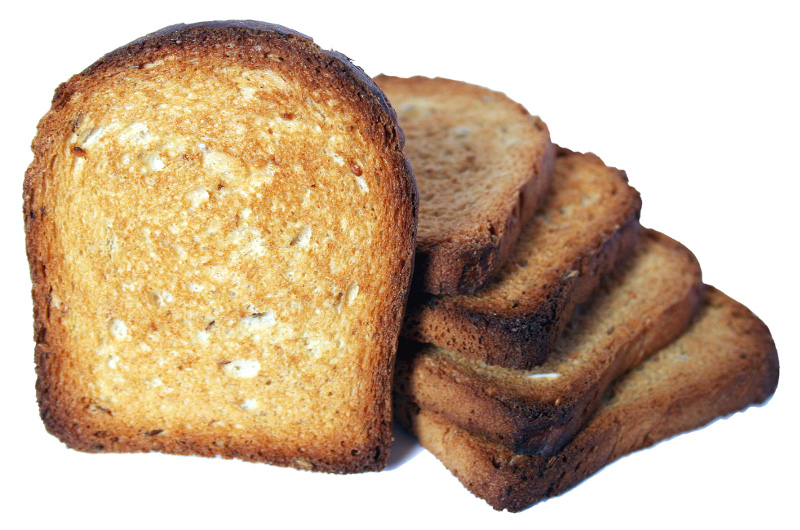
toastToast – for me a Sunday morning treat.

But, alas, this morning our trusty toasty gave up the ghost and was only browning one side of each slice.

So a quick trip to Tesco, and a new toaster purchased – a family essential with an 11 yr old who seems to live on the stuff.

This got me thinking – how many slices had our old toaster toasted, before it burnt its final slice? Which is a good example of a “Fermi” question. A Fermi question is a question that needs a quick, rough estimated answer and they are named after the physicist Enrico Fermi, after his estimation of the power of an atomic bomb test when the Americans were working on developing them in the second world war. A classic Fermi question – often cited as being used in University and job interviews is “How many piano tuners are there in Edinburgh*?” (* or any city of choice).

So back to my toaster – how many slices did it toast in its lifetime?

Well, we’ve had it about six years (it was new when we moved into our current home), so lets call that 6 x 50 weeks (we might be away for a couple of weeks, plus, the whole point of Fermi questions and answers is that they are an estimate, not exact, so we can round to the nearest significant figure) which means its toasted for about 300 weeks.

Whilst I only enjoy toast on Sunday’s and holidays (its very worthy muesli with a banana on top for me on a working day) as a four member family household, I reckon we toast about 40 slices of bread a week.

Making the total toasted 300 x 40 = 12,000 slices of toast produced by our old toaster.

And lets assume the toaster cost £20 (roughly what I paid for its replacement), then £20 divided by 12,000 = £0.00166 recurring, or 0.167 or approx 0.2p per slice of toast.

If I really wanted to, I could estimate the amount of electricity used per slice, the cost of a slice of bread and the cost of whatever gets spread on the toast (I’m a butter and Marmite man myself) to get an estimated cost of each slice of toast we eat.

In these days of iPads and internet, calculators and computers, its easy to forget the importance of estimation, but whatever we may use do the actual calculation, the Fermi thought process remains as valuable as ever.

Regular readers may have noticed that I am a big fan of estimating, you can practise your estimating skills with my Estimate the Answer game.

Posted in Numeracy | Tagged , | Comments closed