Nets

Net of a CubeNets

Nets are the flat (2D) shapes that are then folded up to make a 3D shape.

The next time you’ve finished with a cardboard box, unfold it and see how the 3D shape is made. Cubes and cuboids are fairly straightforward – look out for more complicated (interesting!) shapes. (Hint: this is a great excuse to go out and buy a Toblerone. For research of course. See how that Triangular Prism is constructed.  However, once you’ve unfolded the box, you might as well eat the chocolate …!)

Here’s an ‘interesting’ 3D shape. It’s a triangular prism (but looks a little different from a Toblerone. Why?)  What would it’s net look like? Can you sketch it?
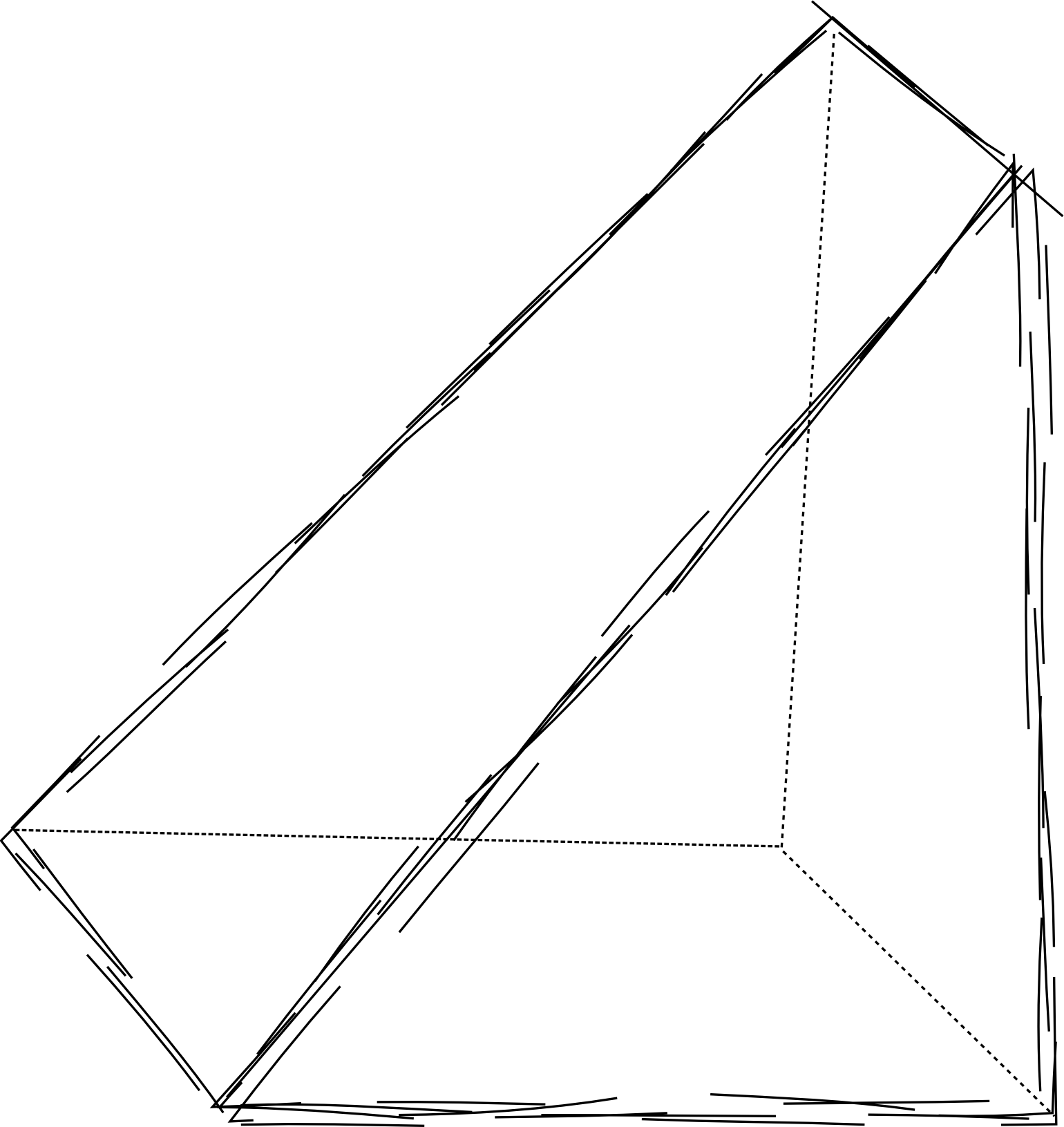
Triangular Prism

Cube

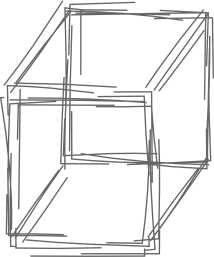
A 2D Picture of a 3D Cube

Have you ever noticed how the numbers are arranged on a dice?

Did you know that opposite faces of a dice add up to seven?

Here’s a net of a cube – visualize the net folding up to make a cube. Can you see how the pairs of opposite faces will add up to seven?
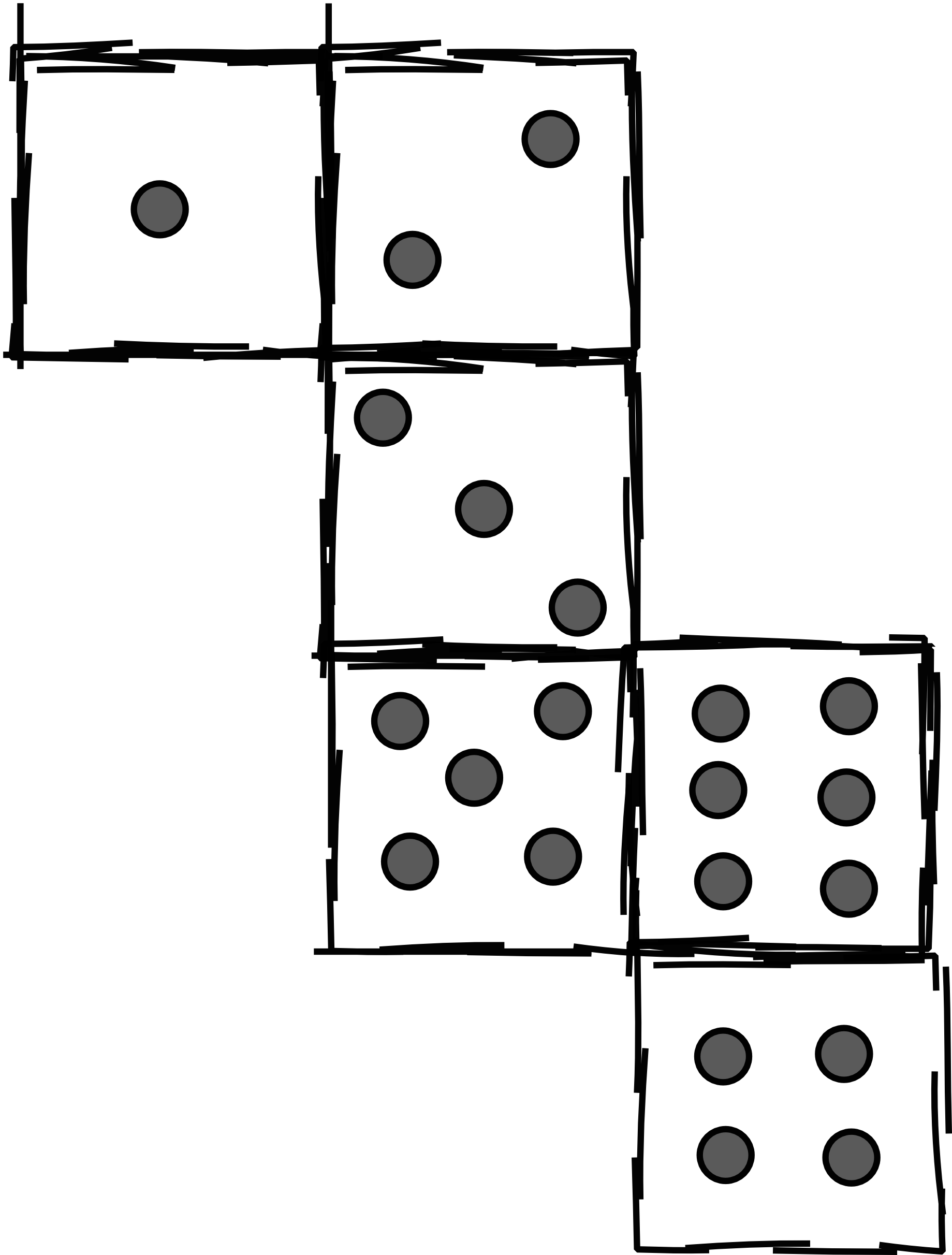
Net for a dice


Teaching Tip

A big shout out must go to my excellent TA Nicky Moulton for coming up with this great idea.

Give the pupils a sheet with the eleven different nets that can be used to make a cube. (Before doing this, you could, and probably should, challenge you pupils to see how many different nets of a cube then can find. There are eleven. This exercise gives you a great opportunity to discuss rotations and reflections, ask questions like: “are those really different nets?”  Introduce the word “Congruent” etc.)

You can click on this link to get a PDF with all the eleven nets of a cube.

Then get the pupils to add the numbers one to six to each net so that it would fold up to create a ‘correct’ dice – e.g. each pair of opposite faces would add up to seven. Encourage the pupils to visualise the net folding up, rather than actually folding it. A great activity that doesn’t involve any sums!

 

Posted in Shape and space, Teaching Tips | Comments closed

Add it up!

Add it up!I’m feeling rather chuffed with myself!

I’ve created a little game/teaching resource called “Add it up!” that I’d like to share with you.

Its pretty simple – a series of numbers flash up on the screen (a second for each number) and all you have to do is add them up in your head. Once all the numbers have been shown an “Answer” button appears and you click that button to reveal the answer and see if you are right.

Before the game starts, you can choose how many numbers you will need to add up, and the range of the numbers that might appear on  the screen.

Like all great games, its simple to start, difficult to master (adding 6 numbers between 1 an 100 in 6 seconds is no easy task!)

You can find the game by clicking on the “Add It Up!” tab above

Add it up tbaor you could just >>click here<<

I was inspired to make this game when I heard a piece on the radio about the Japanese game “Flash Anzan”, where contestants add up numbers as they flash up on the screen.  The experts are phenomenally good, adding 15 3-digit numbers in less than two seconds!!!

I built the game mainly as a teaching resource for Interactive White Boards – see Teaching Tips below for some ideas of how you can use this – but it works just as well for the individual having a go on a computer and it looks great on an iPad, too.

If you do play the game, either yourself or use it in your classroom, I’d love to hear from you and I welcome any feedback – I’ve already had a couple of thoughts as to how I can improve things, but it’d be great to hear from you. You can either use the comments section below to post a comment, or you can send me a message using the form on the Contact page

Teaching Tips

This game makes a great lesson starter.

Have the page projected onto your Interactive whiteboard and start the game. It only takes seconds to complete each game so you could have it up and running as pupils enter the class – if they miss the start of one game, they’ll still be able to quickly join in when the next game starts.

You could give pupils their own mini whiteboards to write down their answers on before you reveal the answer on the board.

Talk about strategies for quickly adding up – ask the pupils how they do it. Do you add up the units columns before the tens? Do you make the number up to the nearest ten?  There’s no ‘right’ way, but remember, the pupils are more likely to listen to one another than to you! Get them to explain their strategies.

Its a great tool for learning and re-enforcing number bonds, don’t forget to tell parents: they can then play the game with their children at home.

Need a five minute filler at the end of the lesson?  Then this is perfect, and you can set the difficulty level by choosing the amount of numbers to add, and the range of numbers to add.

Give it a go – your pupils will love it!

Posted in Games, Numeracy, Teaching Tips | Comments closed

243 – My new favourite number

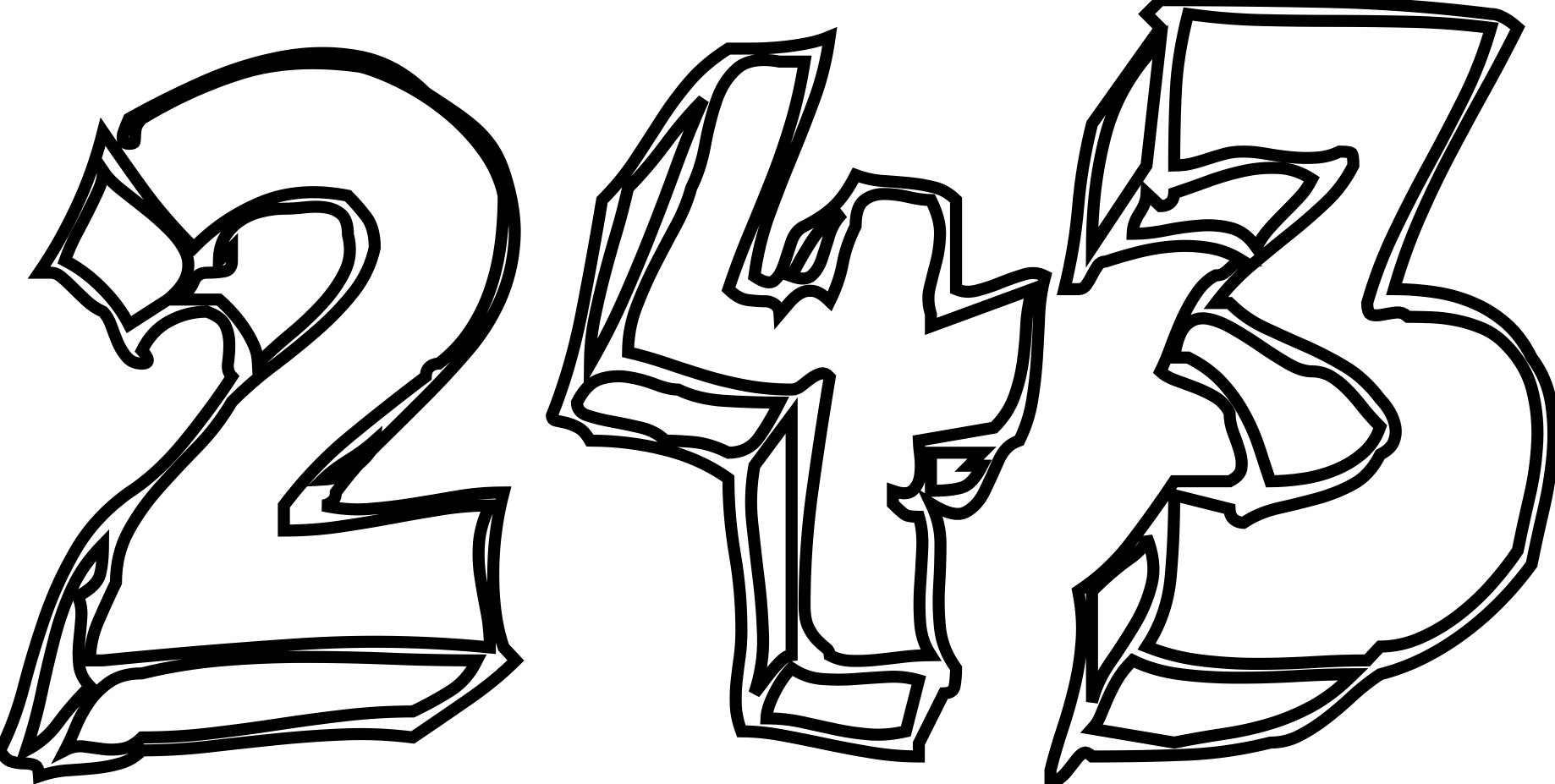
243I’ve got a new favourite number – 243.

Why is it my favourite? It’s not because it’s 3 to the power of 5, although that does make it special.

3 to the power of 5

To find out why 243 is my new favourite number, divide 1 by 243:  1 ÷ 243

OK, to save you doing the maths, the answer to 1 ÷ 243 is:

0.00411522633744855960.004115226337448559 …

which I think is pretty cool.

Now, I’d like to say I discovered this little gem for myself, but I’d be lying. I stumbled across this little snippet whilst reading:

Surely You’re Joking Mr Feynman: Adventures of a Curious Character as Told to Ralph Leighton

Richard Feynman was a great physicist, but this book is not just about physics, its a fascinating and amusing tale of an extraordinary life. You might enjoy reading it, too.


Teaching Tips

How could you use this in a maths lesson?

You could just as your pupils to divide 1 by 243, but that’s quite hard.

But introduce them to division by factors – so to divide by 243, you can split 243 into factors and divide by those.

As 243 = 35 you could divide 1 by 3, then divide that answer by 3, then divide that answer by 3, then divide that answer by 3 and then divide that answer by 3 but it would be much quicker – and much more interesting – to do 1 divided by 9, then divide that answer by 9, then divide that answer by 3 (as 243 = 9 x 9 x s)

Go on, grab a scrap of paper and have a go yourself!

Posted in Numeracy, Teaching Tips | Comments closed

Another Palindromic Date

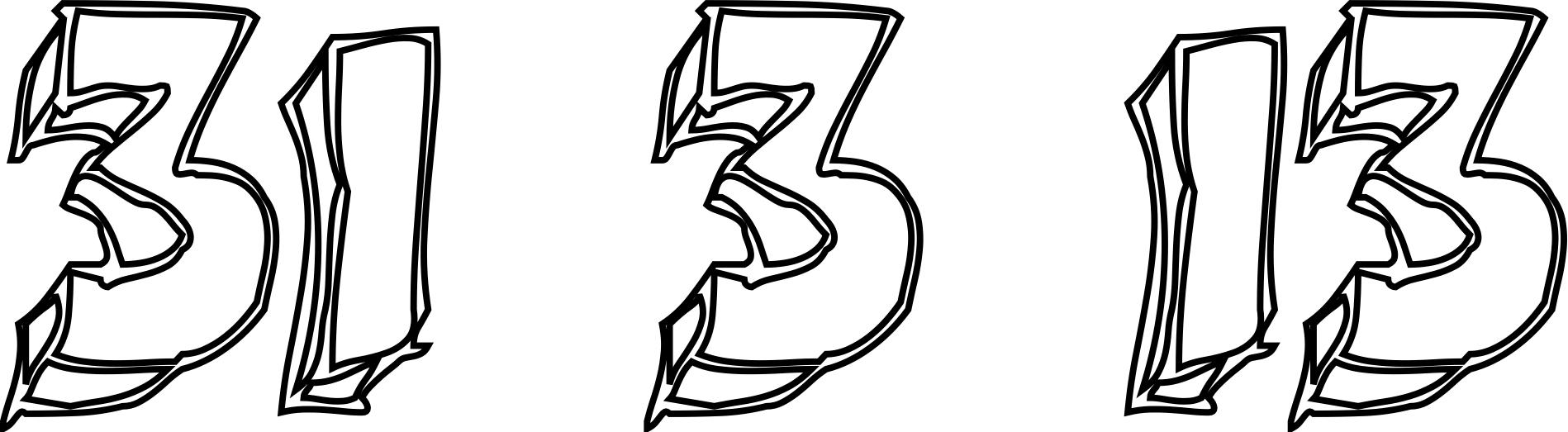
31st March 2013 - a palindromic date - 31 3 13

Happy Easter – and happy Palindromic Date Day!

It’s another day when the date is the same backwards as it is forwards – the last one we had was two months ago, can you work out when the next one will be?

Interested in palindromic numbers? Then you might be interested in this investigation into palindromic numbers

Posted in dates | Tagged , | Comments closed

Pizza!

Here’s an interesting little fact.

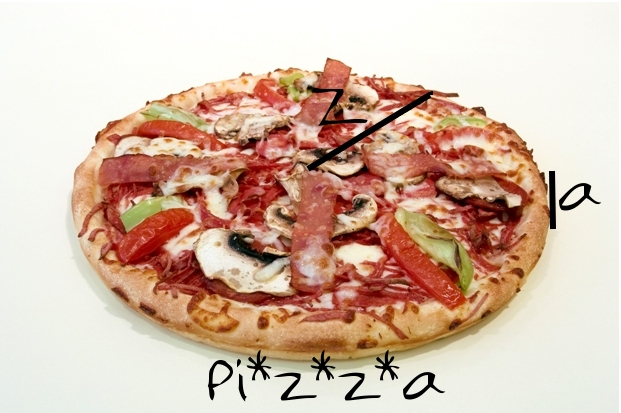
If you had a pizza, with a radius of ‘z’ and a thickness of ‘a’ its volume would be: Pizza

or, Pi times z, times z, times a (remember – we “lazy mathematicians” often leave out times signs when using algebra: F = ma actually is F = m x a)

Lets look at the maths:

A Pizza is a cylinder – a circular tube (albeit a thin one!), or circular prism.

To find the volume of a prism, find the area of the face and multiply by the height.

Our pizza has a circular face and the area of a circle is: π r2 or Pi r squared, or Pi times radius times radius

If the radius of our pizza is z, then the area of the circular face is π z2 or Pi*z*z (* means “multiply” in computer speak)

And to find the volume of our pizza, we just multiply the area of the face by its height – in this case a, so the volume of the pizza is:

Pi*z*z*a or Pizza if we’re being lazy and missing out the multiply symbols.

And I think that’s neat!

I’d like to thank:


AsapSCIENCE – the inspiration behind this post. You can follow them on Twitter, I do.


Posted in Geometry, Shape and space | Comments closed