Asymmetric Auditory Localization …

… or why owls have wonky ears!

A wonky eared Barn Owl

Wonky Ears!

In this post we looked at the symmetry of the human face, and had some fun with editing photos to make them symmetrical, if a little odd looking.

Today, we’re going to look at a remarkable piece of evolution that has favoured asymmetry (that’s the absence of symmetry) over symmetry.

Although you wouldn’t notice from just looking, many owls, such as the Barn Owl pictured above, have asymmetric ears – that means that they are not symmetrical. Their ears are on different places on their head on the left and right sides of their face – the left ear opening is higher up than the right opening.

Owls are great hunters, coming out at night to seek their prey when, of course, there is little or no light.  In these low light conditions, if owls had to rely solely on their eyes they would soon go hungry.  They do, however, use their ears to great effect.

Listening out for potential prey, sound coming from, say, a mouse to their left, would reach their left ear a fraction of a second before it hit the right ear. The owl’s brain processes this and knows the sound – the prey, supper! – came from the left.

And, with one ear higher that the other (those asymmetric, or wonky, ears), using the same idea, it can tell if the sound came from above or below its line of sight.

So, knowing where the sound came from in the left and right direction, and above or below its line of sight, the owl can pin-point exactly the location of its prey, swoop in for the kill and bag its next meal – good news for the owl, less so for the mouse.

We (and I’m generous here, by that I mean pretty much all living organisms) have tended to evolve symmetrically – two eyes, four (or two, or six, or eight legs) etc. and there are lots of good reasons for this (If you want to find out more, you could do worse than grab a copy of “The New Ambidextrous Universe” by Martin Gardiner – be warned, a bit more ‘in-depth’ than this blog post!), but, through natural selection, some Owls have evolved asymmetric ears (wonky ears to you and me) to great advantage.

So symmetry – or its absence – is more than just an irrelevant, pretty abstraction that we use to make pretty patterns. Its all around us – and should be prompting the question “Why?” whenever we notice something is – or isn’t – symmetrical. The answer may be simple, the answer may be complex, but whichever, answering the question will be satisfying and often fascinating.

Symmetrical Owls (but do they have wonky ears?)

If you enjoyed this blog post you might like to listen to this BBC Podcast – an episode of “The Infinite Monkey Cage” where symmetry is discussed.

Posted in Shape and space | Tagged | Comments closed

Fun With Faces

Symmetry – or more correctly, line symmetry – is where you can flip a shape or image on a line (the line of symmetry, mirror line etc.) and it remains unchanged: both sides of the line of symmetry match exactly.

We are used to seeing symmetrical shapes all around us – or shapes that we expect to be symmetrical.  Man-made objects are often truly symmetrical, but nature can be a little ragged around the edges, and what we think may possess perfect symmetry often doesn’t.

Like the human face for example.

Are faces really symmetrical? Well using modern technology we can easily see, and have a little fun with faces at the same time!

Here’s How:

Take an picture of a person – here’s a pic of a fellow maths teacher (looking a little stressed out …):

Using some image editing software – you could use, for example, Photoshop, GIMP (a free image editing software that is similar to Photoshop – it’s what I use), Paint, if you’re a teacher your Smart Board software can be used  – copy and paste one side of the image:

Duplicate the image, flip one copy horizontally (the image editing software makes this all a breeze) and move it until the two sides match up, to give you something like this:

or this


As you can see, we get two very different looking images, so our maths teacher is not, perhaps, as symmetrical as we first thought.

Maybe, though, it was because our subject wasn’t looking directly at the camera. So lets try with another pic – this cheeky little chap clearly has the answer (either that, or he desperately needs to go to the loo!)

Original Picture

So lets have a look at his left side and his right side:

The Left Side

The Right Side


Similar – but you can see the differences.

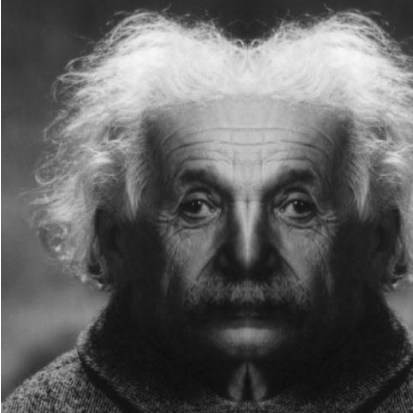
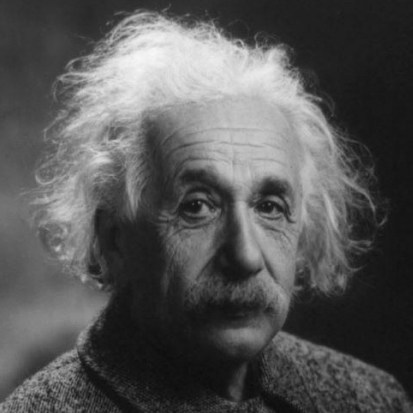
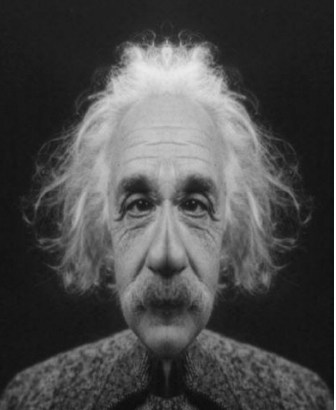
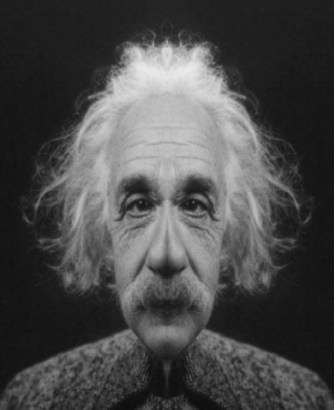
And what about our hero, Einstein?

Left

Original

Right

Have a go yourself – its great fun!

Take a snap or two of friends or family and see how symmetrical they really are. If they are looking a little left or right and not straight ahead you can make your subject really thin or rather wide, with a neck that a pro-boxer would be proud of!

Posted in Shape and space | Tagged | Comments closed

… and the answer is …

Presents and Gifts

Back in this post I asked you the question:

In the song “The Twelve Days of Christmas” how many gifts did my true love give me over the twelve days of Christmas?

As the twelve days of Christmas have now been and gone, I’d thought I’d better give you the solution.

There are 2 ways to arrive at the answer (there’s probably more than two ways, but I’m going to tell you two ways)

Method 1

On the first day I get one gift – a Partridge in a Pear Tree

On the second day I get one gift – a Partridge in a Pear Tree, and two gifts – Two Turtle Doves, so a total of 1 + 2 = 3 gifts.

We could summarise this approach like so:


Day Gifts Received Total
1 1 1
2 1 + 2 3
3 1 + 2 + 3 6
4 1 + 2 + 3 + 4 10
5 1 + 2 + 3 + 4 + 5 15
6 1 + 2 + 3 + 4 + 5 + 6 21
7 1 + 2 + 3 + 4 + 5 + 6 + 7 28
8 1 + 2 + 3 + 4 + 5 + 6 + 7 + 8 36
9 1 + 2 + 3 + 4 + 5 + 6 + 7 + 8 + 9 45
10 1 + 2 + 3 + 4 + 5 + 6 + 7 + 8 + 9 + 10 55
11 1 + 2 + 3 + 4 + 5 + 6 + 7 + 8 + 9 + 10 + 11 66
12 1 + 2 + 3 + 4 + 5 + 6 + 7 + 8 + 9 + 10 + 11 + 12 78

… and all you need to do now is add up the total for each day to get the total amount of gifts given over the twelve days of Christmas.

The observant amongst you will have noticed that the totals for each day create the series of triangular numbers.

Method 2

Work out how many of each type of gift you receive.

e.g.

You get one Partridge in a Pear Tree each day for twelve days, two turtle doves for eleven days, three French Hens for ten days and so.  Add up how many of each gift you get and you have your answer:

1 x 12 = 12

2 x 11 = 22

3 x 10 = 30

4 x 9 = 36

5 x 8 = 40

6 x 7 = 42

7 x 6 = 42

8 x 5 = 40

9 x 4 = 36

10 x 3 = 30

11 x 2 = 22

12 x 1 = 24

(The astute amongst you will have spotted that after 6×7 the pattern repeats itself with the numbers reversed, so you could just add up the first six totals and double the answer.)

Whichever way you do it, you get the answer 364 Gifts

I hope you had a great Christmas and I wish you a happy 2013 (which we already know is an interesting year)

Posted in Uncategorized | Comments closed

2013!

2013

Happy New Year!

2013 is an interesting year:

  • It is the first year since 1987 to be written using 4 different digits
  • It is the first year since 1432 to be written using 4 digits that can be re-arranged into a counting sequence. e.g. 1432 => 1, 2, 3, 4 and our very own 2013 => 0, 1, 2, 3.

Here’s hoping that you have a great 2013.

Happy New Year!

Posted in dates | Comments closed

A Day So Good …

… They Had To Name It Twice!

20 12 2012 - so good they named it twice

A mere eight days after the last ‘interesting date’ we have another belter – a day so good they had to name it twice! 20 12 2012

And at just after ten past eight this evening, in 24 hour time …

20:12 20/12/2012

It’s like Christmas has come early!

Posted in dates | Comments closed